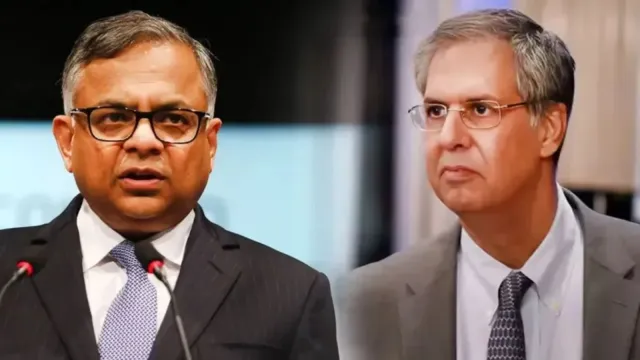

The Bombay High Court has rejected Tata Trusts’ request to postpone or stop an important Tata Sons board meeting scheduled for November 30. The decision allows the meeting to take place as planned, while keeping any decisions made during the proceedings subject to the court’s final ruling.
Justice Abhay Ahuja refused to grant interim relief to Tata Trusts on Friday. The court has now scheduled the next hearing in the matter for January 21, 2027.
The legal dispute is related to the proposed reappointment of N Chandrasekaran as Executive Chairman of Tata Sons for another five-year term starting February 21, 2027.
Why Are Tata Trusts and Tata Sons Fighting?
The disagreement began after the Tata Sons board approved Chandrasekaran’s reappointment through a resolution passed on September 17.
The proposal received four votes in favour and one against, while Chandrasekaran abstained from voting. Noel Tata, who represents Tata Trusts on the board, opposed the decision, whereas Venu Srinivasan supported it.
Tata Trusts, which owns a 66% stake in Tata Sons, has challenged the resolution before the Bombay High Court. The Trusts argue that the decision violated the company’s Articles of Association (AoA), particularly Articles 104B and 121.
One of the main objections concerns the use of a casting vote by Harish Manwani to secure approval for the resolution. Tata Trusts believes that certain decisions require affirmative support from a majority of its nominated directors and cannot be passed using a chairman’s casting vote.
The Trusts have also sought damages of Rs 65 crore in their petitions.
Tata Sons Says Delay Could Affect RBI Deadline
During the court hearing, Tata Sons argued that postponing the November 30 board meeting could create problems for the company in meeting a regulatory deadline set by the Reserve Bank of India (RBI).
According to the company’s lawyers, Tata Sons must submit a listing plan by December 10. The company said delaying the board meeting could affect its ability to comply with the RBI’s requirements.
Senior advocate Harish Salve, representing Tata Sons and N Chandrasekaran, opposed the request for postponement. He argued that there was no sufficient legal reason to stop the scheduled meeting.
Salve also told the court that if the listing process moves forward without delays, Tata Sons could potentially become a publicly listed company by autumn 2027.
Lawyers Present Their Arguments
The hearing witnessed arguments from several senior advocates representing the different sides.
Abhishek Manu Singhvi and Aspi Chinoy appeared for Tata Trusts and questioned the legality of the casting vote used during the September 17 board meeting.
Mukul Rohatgi and Janak Dwarkadas represented Noel Tata, while Harish Salve appeared for Tata Sons and N Chandrasekaran.
Salve rejected Tata Trusts’ interpretation of the company’s Articles of Association. He also pointed out that the Trusts had appointed only two nominated directors to the board, despite having the option to appoint up to five.
He argued that Tata Trusts could not rely on the absence of support from a majority of its nominees to challenge the board’s decision.
Tata Sons Listing Plan Adds Another Layer to the Dispute
The possible stock market listing of Tata Sons also became an important issue during the proceedings.
Tata Sons argued that any final decision to go public would require shareholder approval. Since Tata Trusts owns 66% of the company, its position would remain important in the listing process.
The company also questioned why Tata Trusts was opposing the convening of an extraordinary general meeting despite holding such a significant shareholding.
Meanwhile, Salve clarified that confirming the minutes of the September 17 board meeting would not automatically make the earlier resolutions legally valid. He said Tata Trusts would still have the right to challenge those decisions before the court.
What Happens Next?
With the Bombay High Court refusing to postpone the November 30 meeting, Tata Sons can proceed with its scheduled board proceedings.
However, the court has made it clear that decisions taken during the process will remain subject to the final outcome of Tata Trusts’ petition.
The next hearing is scheduled for January 21, 2027. Until then, the dispute over N Chandrasekaran’s reappointment, the interpretation of Tata Sons’ Articles of Association and the company’s proposed listing is likely to remain a major corporate governance issue.
The outcome could have important implications for the future leadership and ownership structure of one of India’s largest business groups.