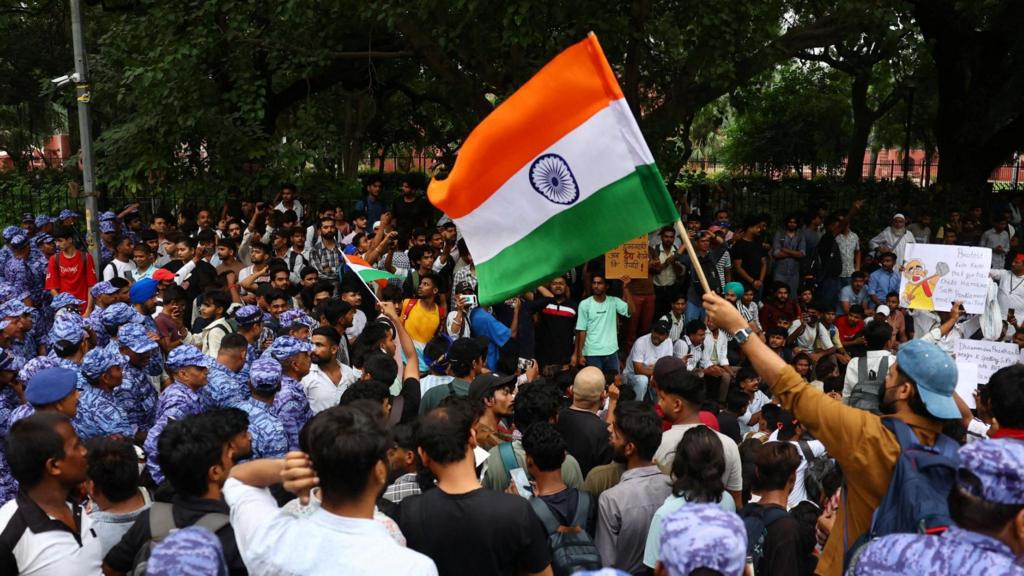

New Delhi: Thousands of supporters of the Cockroach Janta Party (CJP) returned to Delhi’s Jantar Mantar on Tuesday, a day after police dispersed protesters attempting to march toward Parliament. The youth-led movement, which is demanding education reforms and the resignation of Union Education Minister Dharmendra Pradhan, has continued despite heavy security and multiple detentions.
Fresh Crowd Assembles at Jantar Mantar
The protest site witnessed another large turnout as students, job aspirants and activists gathered to continue their demonstration. Many participants said they would remain at Jantar Mantar until the government responds to their demands for reforms in India’s examination system.
The CJP has emerged as one of the country’s most visible youth movements, drawing supporters from several states.
Police Action Sparks Political Debate
Monday’s protest turned tense after demonstrators attempted to march toward Parliament despite restrictions in central Delhi. Police used tear gas and batons to disperse the crowd, leading to injuries on both sides.
Delhi Police said 70 protesters were detained and 118 police personnel were injured during the clashes. Authorities alleged that some protesters became violent, damaged public property and attempted to break through security barricades.
CJP leaders rejected the allegations, maintaining that their protest was peaceful and accusing police of using excessive force.
Opposition Questions Government’s Response
The police action triggered criticism from several opposition parties.
Leader of the Opposition Rahul Gandhi said students were raising genuine concerns over the country’s education system and urged the government to answer their demands. Congress leaders also held protests in Delhi, calling for accountability over the handling of the demonstration.
The central government has not issued a detailed response regarding allegations of excessive force during the police operation.
Sonam Wangchuk’s Support Strengthens Movement
Education reform activist and engineer Sonam Wangchuk has become one of the most prominent faces supporting the movement.
He joined the protest in late June and began an indefinite hunger strike in solidarity with students. After being removed from the protest site by police, Wangchuk was admitted to a hospital, where he has continued his fast.
His participation has helped bring national attention to the campaign.
Meeting With Centre Ends Without Major Breakthrough
Ahead of the police action, a delegation of CJP leaders met Union Health Minister JP Nadda to discuss their demands.
Government representatives appealed to protesters to end their sit-in and assured them that the issues would be examined. However, CJP leaders said the meeting produced no firm commitment, prompting them to continue the agitation.
Why Is CJP Protesting?
The movement gained momentum after the controversy surrounding the NEET medical entrance examination.
Millions of students appeared for the exam, but it was later cancelled following allegations of a question paper leak, requiring a re-examination. Protesters argue that repeated examination controversies have affected the future of students and exposed serious weaknesses in the education system.
The CJP is demanding stronger safeguards against exam irregularities, greater transparency in recruitment and entrance tests, and the resignation of Education Minister Dharmendra Pradhan over the NEET controversy.
The minister has rejected the demand and has defended the government’s handling of the issue.
Protest Shows No Signs of Slowing Down
Despite the police action, CJP supporters have announced that their campaign will continue until meaningful action is taken.
With increasing participation from students, activists and opposition leaders, the protest has become one of the largest education-focused movements seen in the country in recent years. As demonstrations continue, all eyes remain on the government’s next response.