
New Delhi: In a significant step to protect the integrity of public examinations, the Central Government is preparing to introduce tougher provisions under the Public Examinations (Prevention of Unfair Means) Act, 2024. The proposed amendments are aimed at ensuring faster justice and imposing stricter penalties on those involved in paper leaks and examination-related fraud.
The move comes amid growing concerns over examination irregularities and follows recent assurances from Prime Minister Narendra Modi that stronger legal measures are on the way.
Fast-Track Courts for Paper Leak Cases
According to government sources, one of the biggest changes being considered is the establishment of fast-track courts dedicated to handling paper leak cases. These special courts would be expected to complete trials and pronounce judgments within three months, allowing authorities to take swift action against offenders.
The proposal is intended to reduce delays in the judicial process and send a strong message against organised examination fraud.
Jail Term May Increase to 10 Years
The government is also planning to make punishments much stricter. Under the proposed amendments, individuals found guilty of leaking question papers or participating in organised cheating networks could face:
- Up to 10 years of imprisonment
- A fine of up to ₹10 crore
Currently, the law provides for three to five years of imprisonment and a maximum fine of ₹10 lakh for those convicted of paper leak offences.
Authorities are also expected to tighten accountability for service providers and institutions that fail to report suspected examination fraud. Existing provisions already allow financial penalties for non-reporting, while organised paper leak rackets can attract severe criminal punishment.
Amendment Bill Expected in Parliament
Sources indicate that the amendment bill is likely to be introduced in the Lok Sabha during the upcoming week of the Monsoon Session. Once approved by Parliament, the revised law is expected to provide investigating agencies and courts with stronger legal tools to deal with examination-related crimes.
PM Modi Assures Students
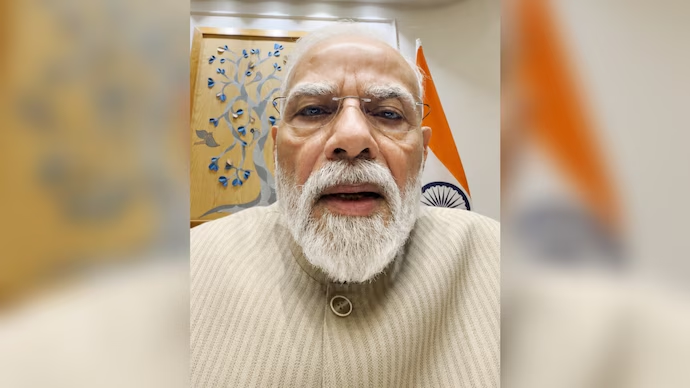
Prime Minister Narendra Modi recently addressed students through a video message, describing paper leaks as a serious issue affecting the future of lakhs of young aspirants and their families.
He said the government has already taken multiple steps in recent months, including arresting several accused and ensuring that examinations were conducted quickly so students would not lose an academic year.
The Prime Minister also stated that he had instructed officials to prepare a proposal for fast-track courts and confirmed that the plan would be placed before the Union Cabinet before being introduced in Parliament.
Opposition Raises Concerns
The issue has also become a major political talking point. Leader of Opposition Rahul Gandhi recently claimed that numerous paper leak incidents had occurred over the past decade and questioned the effectiveness of the existing system in securing convictions.
Following the Prime Minister’s announcement, Rahul Gandhi reiterated his demand for accountability from the Union Education Ministry, saying students deserve a transparent and fair examination system.
A Stronger Legal Framework
If the proposed amendments are passed, India will have one of its toughest legal frameworks against examination malpractice. The government believes that faster trials, harsher punishments, and increased financial penalties will help discourage organised paper leak networks and restore confidence in public examinations.
The proposed reforms are expected to benefit millions of students by strengthening the credibility and transparency of competitive examinations across the country.