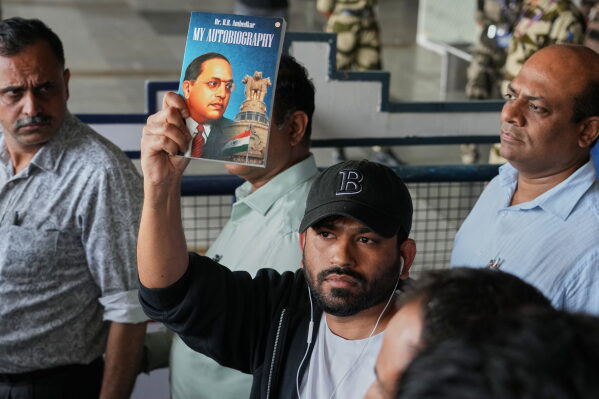

New Delhi: As thousands of students and young supporters gathered at Delhi’s Jantar Mantar demanding accountability in the education system, a new question has begun circulating across social media and political circles: Could Cockroach Janta Party (CJP) founder Abhijeet Dipke follow a path similar to that of Arvind Kejriwal?
The comparison may seem ambitious, but it is rooted in a familiar pattern. Like the India Against Corruption (IAC) movement that emerged in 2011, the CJP has transformed public frustration over a specific issue into a rapidly growing grassroots campaign.
A Movement Built Around Public Anger
The India Against Corruption movement gained momentum by channeling widespread anger against corruption and governance failures. Led by social activist Anna Hazare and supported by figures such as Arvind Kejriwal, the movement attracted millions of Indians who felt disconnected from the political establishment.
More than a decade later, CJP appears to be tapping into another powerful emotion: the anxiety and frustration of students.
Through campaigns focused on alleged examination irregularities, recruitment concerns, student mental health, and education reforms, Dipke has positioned the movement as a voice for young Indians who feel their concerns are being ignored.
Why the Comparisons Are Growing
Both movements share several similarities.
Like IAC, the Cockroach Janta Party started outside traditional politics. It gained traction through public participation rather than party structures or electoral networks.
Both movements also found success by focusing on issues that directly affect ordinary citizens. While IAC rallied people around anti-corruption demands, CJP has centered its campaign on education and examination transparency—issues that impact millions of students and families across India.
The large turnout at Jantar Mantar has further strengthened comparisons, as the same venue played a crucial role in the rise of the anti-corruption movement more than a decade ago.
Key Differences Between IAC and CJP
Despite the similarities, important differences remain.
The India Against Corruption movement evolved into a nationwide campaign that attracted support from professionals, activists, business leaders, students, and the middle class. Its message expanded beyond a single issue and became a broader call for governance reforms.
CJP, however, remains largely focused on education-related concerns. While student issues resonate strongly with young people, the movement has yet to demonstrate whether it can broaden its agenda and appeal to a wider section of society.
Political analysts argue that this transition will be crucial if the movement hopes to sustain momentum beyond protests and social media campaigns.
Can Student Issues Become a National Political Force?
Education is one of the few issues that cuts across class, region, and political affiliation. Competitive examinations such as NEET, CUET, CBSE board exams, and recruitment tests influence the future of millions of families every year.
By focusing on these concerns, Dipke has managed to connect with a demographic that often feels overlooked in mainstream political debates.
Supporters argue that the movement reflects growing frustration among students over academic pressure, examination controversies, and employment uncertainty. Critics, however, question whether these concerns alone can sustain a long-term political movement.
The Road Ahead for Abhijeet Dipke
For now, Dipke remains a protest leader rather than a political candidate. The Cockroach Janta Party has not yet demonstrated the organizational structure, nationwide network, or electoral strategy that helped transform the anti-corruption movement into the Aam Aadmi Party.
However, history has shown that grassroots campaigns can evolve rapidly when they capture public sentiment at the right moment.
Whether CJP remains a student-led pressure group or develops into a broader political movement will depend on its ability to expand beyond education-related issues and maintain public engagement over time.
As crowds continue to gather and discussions around education reforms intensify, one thing is becoming clear: Abhijeet Dipke has emerged as a prominent voice among India’s youth. Whether that journey ultimately mirrors Arvind Kejriwal’s political rise remains a question only time can answer.