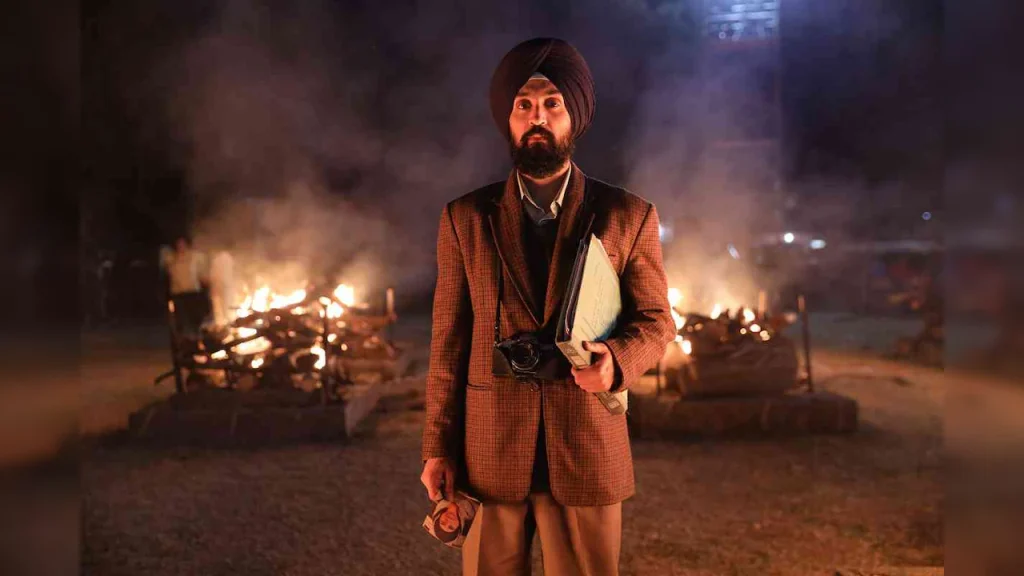

Nearly three decades after the disappearance of human rights activist Jaswant Singh Khalra, his case continues to be remembered as a defining moment in India’s fight for accountability and justice. What began as an investigation into alleged illegal cremations during Punjab’s years of militancy eventually evolved into a landmark legal battle that tested the country’s criminal justice system and reinforced judicial oversight in cases involving custodial violence.
The case has recently returned to the spotlight following renewed public interest generated by a film inspired by Khalra’s life and work.
The Investigation That Drew National Attention
During the mid-1990s, Jaswant Singh Khalra examined official municipal records relating to cremations in Punjab. By comparing available public records, he alleged that thousands of unidentified individuals had been cremated without proper identification or legal procedures during the insurgency years.
His findings were released publicly in January 1995 and quickly attracted attention from civil rights organisations, legal experts, journalists, and international human rights groups. The allegations sparked widespread debate over police actions during Punjab’s counter-insurgency operations.
Disappearance After Public Disclosure
Only months after publishing his findings, Khalra disappeared.
According to court records, he was allegedly taken into custody by Punjab Police personnel outside his residence in Amritsar on 6 September 1995. Witness accounts presented during later legal proceedings stated that armed policemen forced him into a vehicle in broad daylight.
Despite repeated efforts by his family to locate him, Khalra did not return home.
Judicial Intervention Changed the Course of the Case
The matter soon reached the Supreme Court of India through petitions seeking immediate judicial intervention.
His wife, Paramjit Kaur, approached the apex court requesting a writ of habeas corpus. Taking note of the seriousness of the allegations, the Supreme Court ordered an independent investigation by the Central Bureau of Investigation (CBI) instead of allowing the Punjab Police to continue the inquiry.
The decision is widely viewed as one of the judiciary’s strongest responses to allegations of custodial disappearance involving serving police officials.
CBI Investigation and Criminal Trial
The CBI carried out a detailed investigation under the supervision of the Supreme Court.
According to the agency’s findings presented before the courts, Khalra had been unlawfully detained before being murdered. The investigation led to charges against several police personnel.
Legal proceedings continued for several years. Some accused died before the conclusion of the trial, while six police officials ultimately faced prosecution.
In November 2005, a trial court convicted all six accused in connection with the abduction and killing.
Higher Courts Upheld the Convictions
Although four of the convicted officials initially received lesser sentences, the Punjab and Haryana High Court later enhanced their punishment to life imprisonment, placing all six convicted officers on equal footing.
The case eventually reached the Supreme Court, which upheld the convictions and life sentences in 2011, bringing one of India’s longest-running human rights prosecutions to a close.
Timeline of the Jaswant Singh Khalra Case
| Year | Key Event |
|---|---|
| 1984–1994 | Alleged illegal cremations during Punjab’s militancy period. |
| January 1995 | Khalra publicly releases findings based on cremation records. |
| September 1995 | Khalra disappears after his alleged abduction. |
| November 1995 | Supreme Court orders a CBI investigation. |
| 1995–1996 | CBI investigates the disappearance under court supervision. |
| 2005 | Trial court convicts six Punjab Police officials. |
| 2007 | High Court enhances all sentences to life imprisonment. |
| 2011 | Supreme Court confirms the convictions and life sentences. |
Why the Khalra Case Remains Relevant
Legal experts continue to cite the Jaswant Singh Khalra case as a milestone in India’s constitutional and human rights history.
The proceedings demonstrated that allegations against state officials could be independently investigated through judicial intervention. The case also strengthened the importance of habeas corpus petitions and reinforced the principle that law enforcement agencies remain accountable under the rule of law.
Beyond the criminal convictions, the litigation encouraged broader institutional scrutiny of alleged illegal cremations during Punjab’s insurgency period, making it a significant reference point in discussions on civil liberties, custodial deaths, and police accountability.
Frequently Asked Questions
Who was Jaswant Singh Khalra?
Jaswant Singh Khalra was a Punjab-based human rights activist who investigated allegations of illegal cremations and enforced disappearances during the state’s militancy period.
Why is his case considered a landmark?
The case resulted in the conviction of police officials after a Supreme Court-monitored CBI investigation, making it one of India’s most significant judgments involving custodial disappearance and human rights.
When was the final Supreme Court decision delivered?
The Supreme Court upheld the convictions and life imprisonment of the six convicted officials in April 2011.
Why is the case still discussed today?
The case continues to influence conversations on police accountability, constitutional protections, human rights, and the legal safeguards available against unlawful detention and custodial violence.